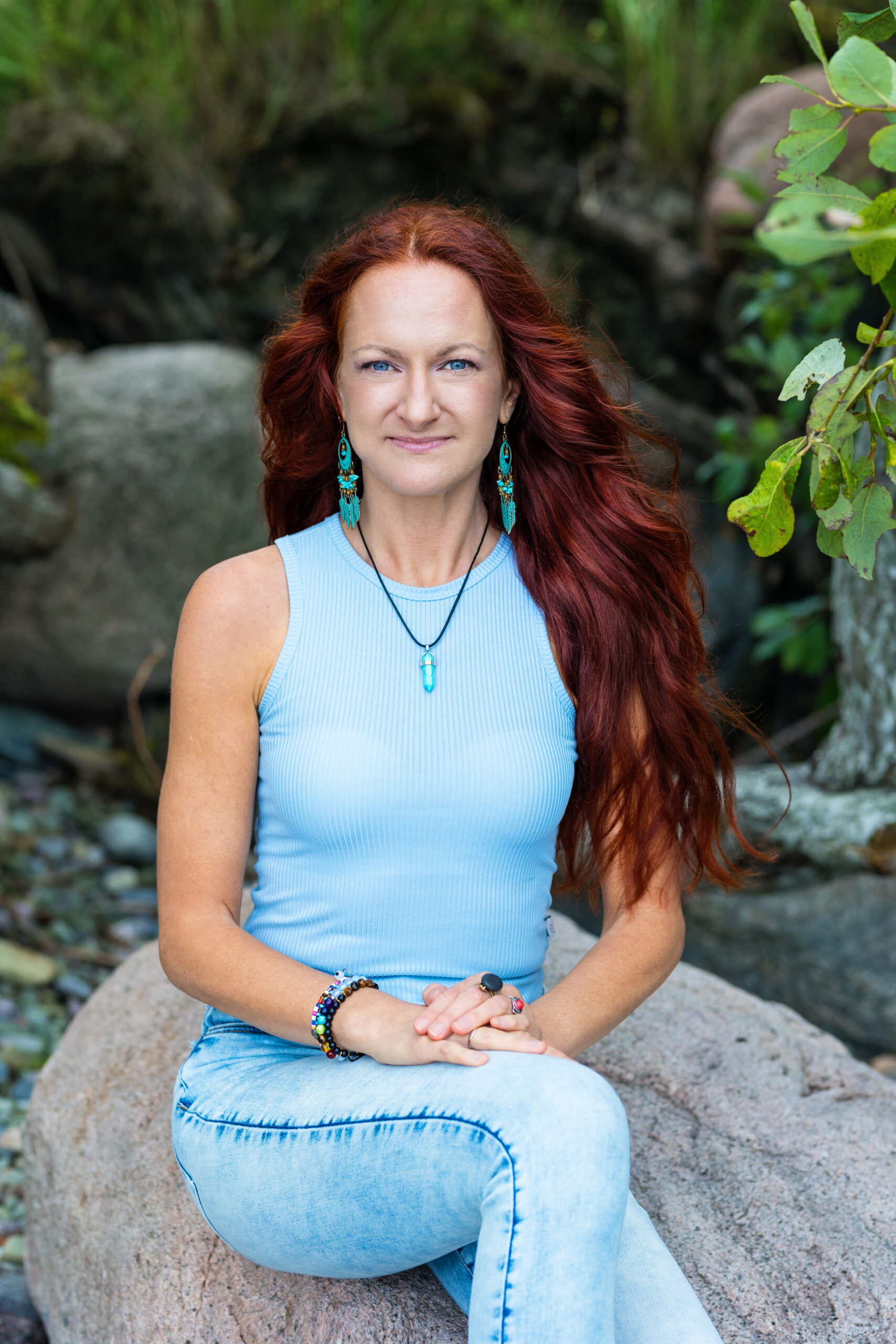
Triin Ülesoo - founder of Brain Spa Hyperbaric

Brain Spa wasn't supposed to be a company.

Triin was seriously ill, knew a hyperbaric chamber could help, and found that buying one in Europe was nearly impossible. Brain Spa is what she built so nobody else has to face that.

The story

Nobody could tell Triin exactly what was wrong — but everything pointed toward something neurological. Something in the brain.

She researched everything, deeply. Somewhere in that search she found hyperbaric oxygen: studies and case histories describing its effects on the brain. She didn’t know whether it would work for her. But her logic was simple: 
This is good for the brain. My problem seems to be in the brain. So it might help me. I’ll find the amount my body can handle — even if it’s five minutes a day.
The first attempt didn't go the way she hoped. At a clinic in Estonia, the standard pressure proved too much for her system. It took months to learn — from a stranger in a forum — that pressure can be adjusted. One small technical detail, a relief valve that doesn't have to be fully closed, was the difference between a chamber she couldn't use and one she could. She tried a gentler setting.
That one, her body accepted.
So she decided to buy a chamber of her own. And that’s where the real nightmare began. In Europe there were barely any options. Prices ran from €17,000 to €50,000 — when you could find a price at all, because most sellers required an email chain just to learn what a chamber costs.

Technical information existed, but in a form an ordinary buyer couldn’t use — what a specification actually meant, you’d only learn once the chamber was already in your home. And nobody would explain. In the end she bought a used chamber from the US. It was claustrophobic to begin with; then the zippers gave out, and it became unusable.

Brain Spa exists so nobody else has to go through that. A quality chamber at a price that’s on the page. A buying process that treats you like an intelligent adult. And education that goes deep — because one small piece of information, clearly explained, can be the difference between a chamber that works for you and one that doesn’t.
And it starts from the brain. 
Because for Triin, it always did.

What we built in response

Three promises that came out of that story.

ACCESSIBILITY

From clinics to living rooms

For years, hyperbaric oxygen was something you saw in the media — celebrities, elite athletes, specialist clinics. The technology hasn't changed; who can have it has: a real chamber now fits an ordinary home and an ordinary week. And buying one in Europe shouldn't be hard, either — the price is on this website, and delivery, warranty and support are handled by us, personally. 
See the chambers and pricing

CLARITY

You understand what you're buying

A hyperbaric chamber isn't rocket science — every part of it, and every number that matters, can be explained in plain language. So that's what we do: not just publishing the full specifications, but walking you through what each one means and why it matters, until the decision is genuinely yours. Buying a chamber shouldn't require an engineering degree — or blind trust.
See the full specifications

DEPTH

Education that goes deep

Our research library stands on its own — it exists whether you ever buy from us or not. We've tried to make the science read like a story worth following — what question each study was chasing, what it found, and where the evidence runs thin — and we help you interpret what the results can and can't tell you. We'd rather you understand this technology deeply than buy quickly.
Explore the research

The people behind Brain Spa

Brain Spa is run by a couple. Triin, who learned the hyperbaric world from the inside — and Rauno, who approaches the chamber the way he approaches spacecraft. The person answering your questions and the engineer behind these chambers share a kitchen table.
Triin Ülesoo - Founder of Brain Spa Hyperbaric

TRIIN ÜLESOO

Founder
Triin learned hyperbaric oxygen the hard way — not from a certification course, but from her own body, thousands of hours of research, and the slow discovery that pressure and duration are deeply individual.

She has spent years going deep into this field: reading the studies and the books, talking with leading specialists, and following real-world experiences daily as the admin of one of the largest hyperbaric oxygen groups on Facebook — HBOT (Hyperbaric Oxygen Therapy) for Health — where she answers people's questions long before they're customers of anyone.
That's why Brain Spa can answer questions most sellers have never even been asked. What if the standard pressure feels like too much? How do you start carefully? Can this chamber run at a lower pressure? (Yes. She'll show you how.)

Today Triin runs Brain Spa's education work and answers every customer personally. Not because the company is small — but because this is the company she needed when she was the one asking questions nobody could answer.
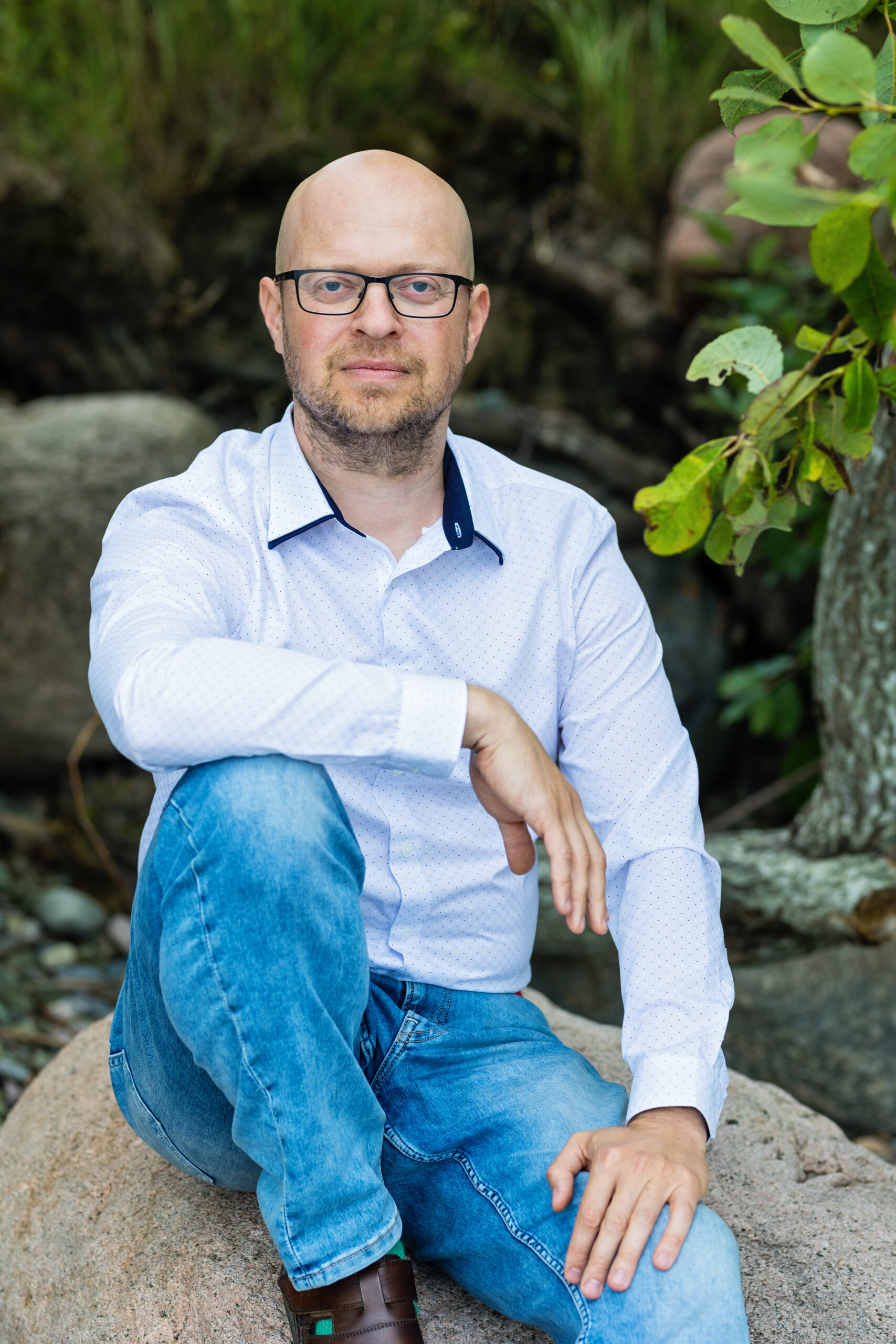
Rauno Gordon - Technical Director and Co-Founder of Brain Spa Hyperbaric

RAUNO GORDON

Co-Founder & Technical Director
Rauno holds a PhD in biomedical engineering and has spent his career building things that aren't allowed to fail. He led TalTech's student satellite programme — two satellites launched into orbit — and has founded companies developing space and stratospheric drone technologies.

Which is exactly why you can trust him when he says a hyperbaric chamber is not complicated. He has gone through ours himself — how they're built, how they behave, and what stands behind every figure we publish. When you ask a technical question — pressure, airflow, valves, materials — the answer comes from an engineer who builds spacecraft, not from a forwarded factory email.

Where the chambers come from

Chosen deliberately. Verified by our own engineer. Answered for in Europe.
Our chambers are produced in partnership with one of the leading manufacturers in this field, in China — which is where nearly all soft chambers are made today, European brand names included. 

We started from a clear understanding of what makes a soft chamber good — and it runs deeper than a spec sheet: airflow at working pressure, not free-flow; how the compressor is built and how it behaves over hours of use; the strength of the fabric and of every weld; how the valves cap pressure, how the zippers open from the inside, how the window seams hold up over years of cycling. 

These chambers are built to our specifications, and the parameters that decide quality are choices we made deliberately.
Every figure we publish is either independently tested or verified by our technical director on the chambers themselves. Warranty, quality control and consumer-law responsibility live with us, in Europe. 

We made sure it's a chamber we'd use ourselves — because we do.

What we believe

Seven convictions that shape everything we do — from what we sell to what we publish.

1

Health starts in the brain.

It weighs 2% of your body, uses 20% of your oxygen, and regulates everything else. That's why we start there — and why we're called Brain Spa.

2

Dose is one of the most important questions in hyperbaric oxygen — and one we're still learning the answer to.

Not everyone needs the same pressure, duration, or rhythm. The science is still developing. That's what makes it worth paying attention to.

3

Your body is smarter than your logic.

When a system is overwhelmed, pushing harder rarely helps. Sometimes the wisest move is less, not more.

4

Healing is not an intervention — it's a rhythm.

A single session doesn't change anything. A consistent routine, respected over time, does the quiet work.

5

A hyperbaric chamber is not complicated — and nobody should pretend it is.

It's a pressurised enclosure with a compressor. When you understand it, you can make a real decision.

6

People who take responsibility for their own health are not fringe — they're ahead.

And they deserve a brand that respects their intelligence.

7

A chamber at home should one day be as normal as a sauna in Finland.

Not a luxury. Not a curiosity. A foundational tool for anyone serious about long-term wellbeing.

From biohacking to bio-harmonizing

Where we think wellness goes next.
Wellness has spent a decade learning to push: measure more, stack more, optimize harder. The next decade, we think, belongs to something quieter. If the last era was biohacking, the next one needs a different word: bio-harmonizing — working with your body instead of overriding it. Doing less, more deliberately. Doing nothing, on purpose.

We named the chambers after it. Both carry old European words for something we've nearly forgotten how to have — the pleasure of a calm, unhurried mind.

REVERIE

the sitting chamber
Reverie is an old French word for daydreaming — the unhurried wandering of a waking mind. It names one of the quietest pleasures there is, and one of the rarest now: thought with room to move. An hour, a window, nowhere else to be. Ideas float up the way they always have: uninvited, unforced, and better than the ones you chased. 

That's all daydreaming ever was, before anyone called it a waste of time. Beyond the reach of everything, just for a while.

SERENO

the lying chamber
Sereno is what Italian weather reports say when the sky has cleared after a storm — everything rinsed, light back, the ground still smelling of rain. The calm that only comes after something has passed: clean, wide, still. Spanish keeps the same word for the cool, clear air of a settled night; two languages agreed, long ago, that this feeling deserved a name. 

The tension gone out of the air — the calm of it being over. And that particular quiet the wind leaves behind.

Ready when you are

The chambers

Specs, pricing, and what's included, all on one page.
View chambers

Go deeper first

The Research Hub — real questions, unpacked in plain language.
Explore the research

Or just ask

Write to us — every message gets a personal reply.

Contact
Brain Spa Hyperbaric logo
Real clarity for your brain.
sungraduation-hatearth